
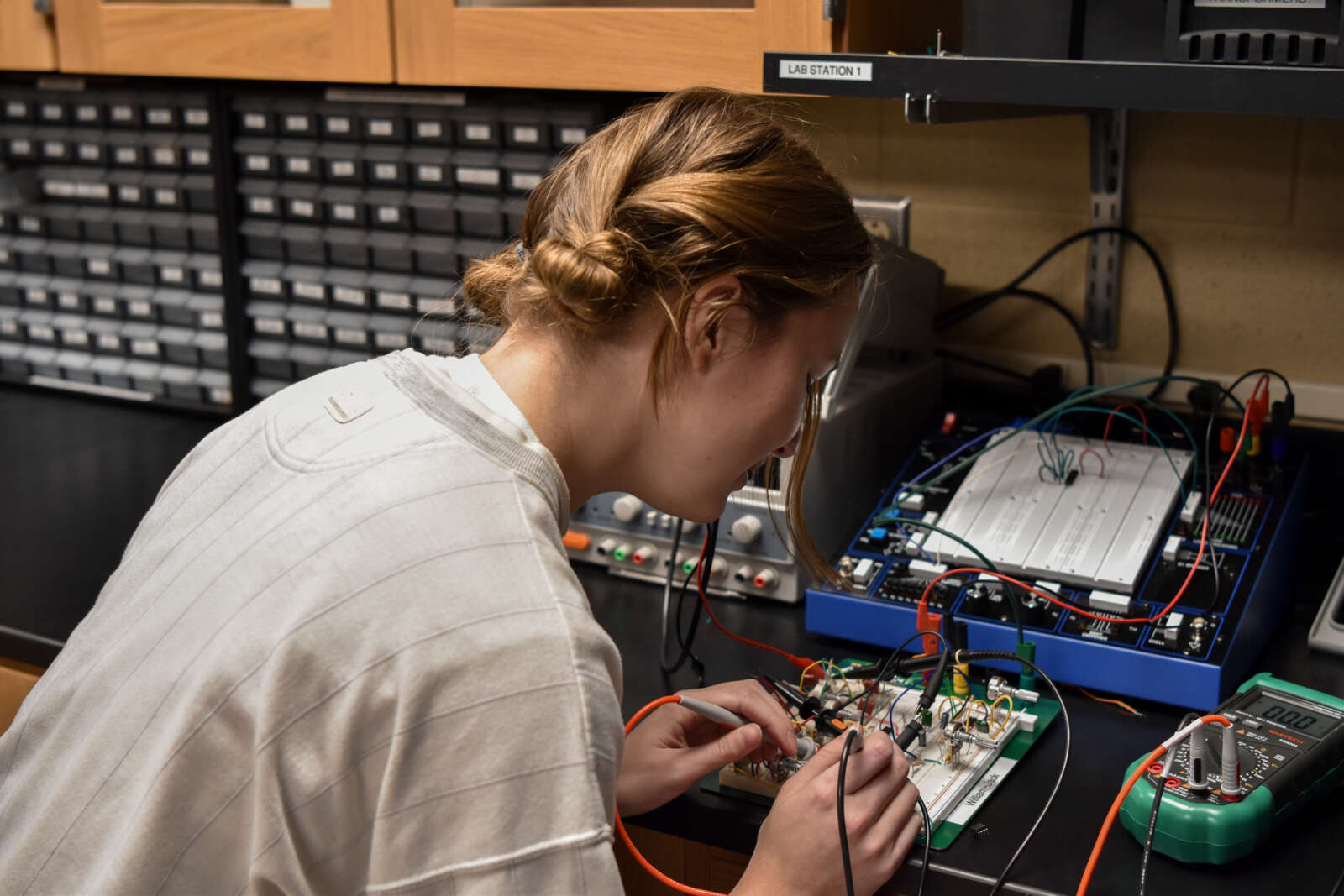
Bachelor of Science, School of Engineering
Program Mission
The mission of the Electrical Engineering Program is to provide a multidisciplinary engineering undergraduate education built on an authentically Catholic liberal arts foundation. Graduates of the program will be professionals who are excellent problem solvers, committed to the highest ethical standards, and proficient communicators. They will understand the role of engineering as a profession and their duty as engineers to promote the good of society.
Program Requirements
See program requirements, course sequences and more in the Course Catalog.
Contact

Other Department Offerings
- Bachelor of Science in Civil Engineering
- Bachelor of Science in Chemical Engineering
- Bachelor of Science in Mechanical Engineering
What is Electrical Engineering?
Electrical Engineers design, develop, test, and supervise the manufacture of electrical equipment. Some of this equipment includes electric motors; machinery controls, lighting, and wiring in buildings; radar and navigation systems; communications systems; and power generation, control, and transmission devices used by electric utilities. Electrical engineers also design the electrical systems of automobiles and aircraft.
Although the terms electrical and electronics engineering often are used interchangeably in academia and industry, electrical engineers traditionally have focused on the generation and supply of power, whereas electronics engineers have worked on applications of electricity to control systems or signal processing. Electrical engineers specialize in areas such as power systems engineering or electrical equipment manufacturing.